
Sticker Faces
Guess a page number and share sticker-filled laughter.
View instructions →Make time to enjoy being together.
Quick navigation
Jump to illustrated instructions, or browse every activity plan by topic.
Family Night Activity Ideas
Guess a page number and share sticker-filled laughter.
View instructions →Stack your hands and enjoy a playful moment together.
View instructions →Share a wish, toss slippers, and encourage one another.
View instructions →Guess the secret camping rule and share specific thanks.
View instructions →Family Night Activity Ideas
Choose a family night activity by your child’s age, topic and available time.
Suggestions for you
Tonight’s Family Night
Create safety and enjoyment rather than a lecture or a meeting to criticize children.
Agree on once a week or every two weeks.
Thirty to forty minutes can be enough.
Everyone can choose a topic or lead an activity.
No ridicule, old grievances or forced answers.
Enjoy playing together.
A real Family Night story

A busy single mother wanted to do something enjoyable with her teenage son, who did not live with her, to restore their growing distance. He loved music and wanted to learn guitar, so she gave him a guitar.
At their weekly visits, he played and they sang together. As their voices blended, their emotional connection gradually grew again.
By beginning with her son’s interests and making time for a shared activity, the mother created opportunities for them to grow closer.
A real Family Night story

After hearing Dr. Tsai speak, a very busy elementary school principal in Kaohsiung began Family Night with her daughters.
Every Friday at eight in the evening, she brought delicious luwei—Taiwanese braised snacks—home from the night market. She invited her daughters to take a break from studying, sit in the living room, eat and chat.
Years later, after leaving home for university, a daughter called and told her mother that what she missed most was their “luwei night.”
Regular, enjoyable time together can turn ordinary moments into treasured memories. Remembering love and companionship can offer support during challenges and remind children that they are not alone: a loving family cares about them.
Choose one topic a week. Let the teenager help choose the order. Parents participate too; anyone may pass.
20 minutes: opening 2 minutes; discussion and activity 16 minutes; closing 2 minutes.
How would you respond to Boys must not cry or Girls cannot do that job?
How can chores reflect time and ability rather than gender? How do we respond to hurtful jokes?
Take turns as speaker, responder and observer. Replace a stereotype with respectful words, then discuss chores.
Practice asking for consent and avoiding gender-based limits this week.
20 minutes: opening 2 minutes; discussion and activity 16 minutes; closing 2 minutes.
What recently interested you or gave you a sense of achievement? What did parents dream of in high school?
Which interests, abilities, income needs and lifestyles matter to you? What do you still need to explore?
Choose a course or career to explore. Parents listen first. Write one step to complete within two weeks, such as researching a course or interviewing a worker.
Set a time to share discoveries without rushing a lifelong decision.
20 minutes: opening 2 minutes; discussion and activity 16 minutes; closing 2 minutes.
Each person names something they have struggled to find time for.
How can you balance study, sleep, leisure and family time? Which distractions can change?
Draw a weekly schedule. Add fixed commitments and rest, split a priority task into steps and leave flexibility. Adults participate too.
Choose one small change to try this week and review it together.
20 minutes: opening 2 minutes; discussion and activity 16 minutes; closing 2 minutes.
Describe your mood as sunshine, clouds or a storm, or pass.
What signals appear in your body when emotions rise? Would you like listening, company or problem solving?
Use exam stress or a misunderstanding to practice naming feelings and needs. Choose a response: pause, walk, breathe slowly or talk to someone trusted.
Name someone you can turn to and practice asking for support.
20 minutes: opening 2 minutes; discussion and activity 16 minutes; closing 2 minutes.
What qualities do you value in friends? Use imaginary examples without naming classmates.
How do you refuse lying, sharing private messages or doing something unwanted? Can friends disagree?
Role-play stating your position, setting a boundary and offering an acceptable alternative. Adults share a difficulty too.
Agree to seek family or trusted adult support for threats, exclusion or unsafe demands.
20 minutes: opening 2 minutes; discussion and activity 16 minutes; closing 2 minutes.
What would you like to buy? Is it a need, a want or both?
What costs should you consider before buying? Do you need everything your friends have?
Divide a hypothetical allowance among essentials, savings and flexible spending. Add an unexpected expense and adjust. No one needs to reveal income or account details.
Track spending for a week or create an affordable saving plan.
New family night activity
Stand together on a newspaper, fold it in half and work out a new arrangement. As the space shrinks, practice creativity and mutual support. The goal is caring for everyone, not fitting onto the smallest possible sheet.
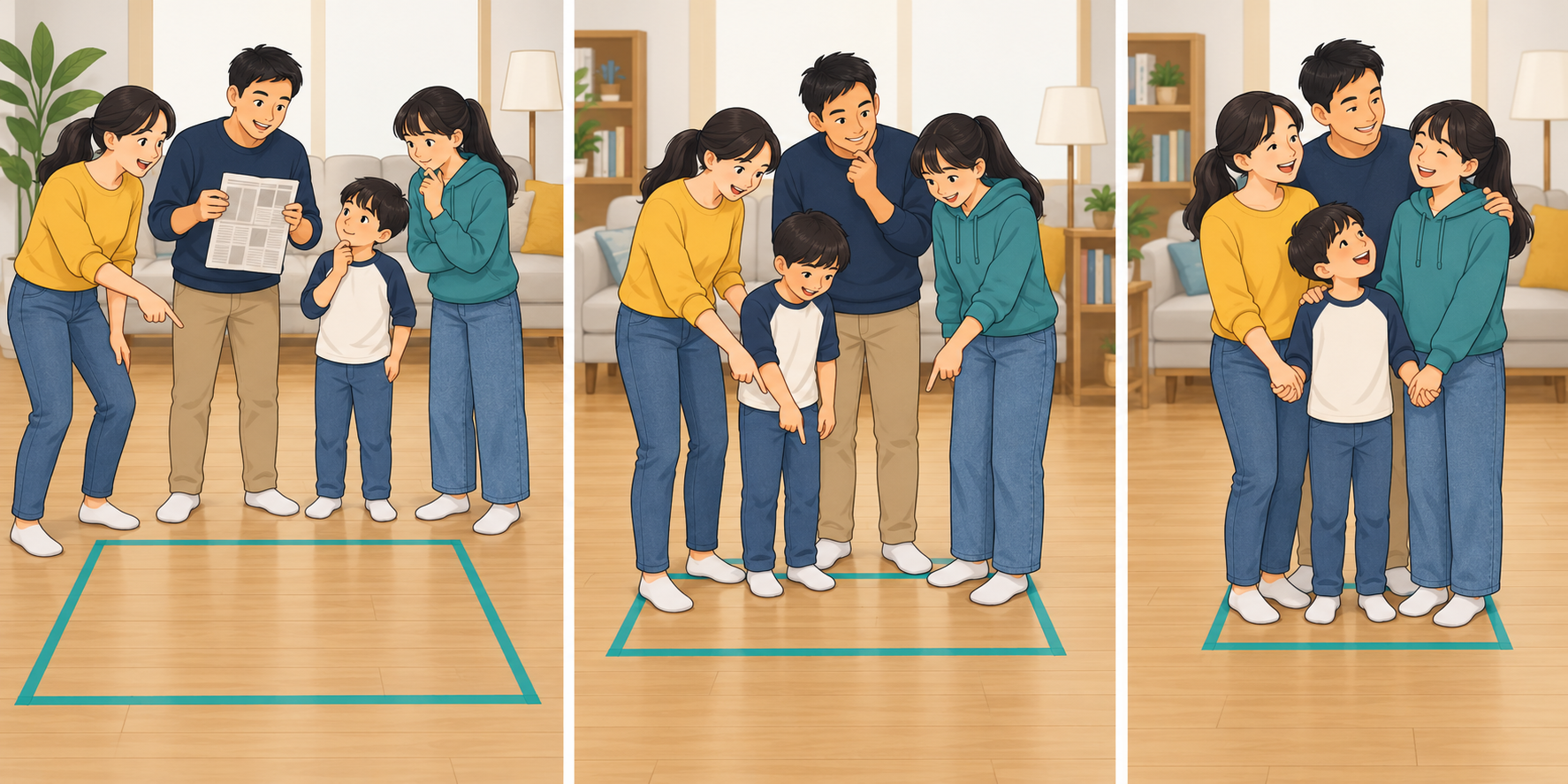
These are planning suggestions, not an ability test. Choose the tabletop version together if anyone has mobility or balance difficulties or prefers not to have physical contact.
Each person chooses a block to represent them. Place all blocks on a sheet, fold the sheet progressively and agree how to keep every block inside without stacking. If they no longer fit, return to the previous size. Everyone participates in decisions.
Being in the same boat means finding a safe place for everyone, not making each person endure discomfort.Back to Family Night Activity Ideas
Family Night Activity Ideas|20 minutes
Guess the last digit of a page number, share stickers and enjoy laughing together.
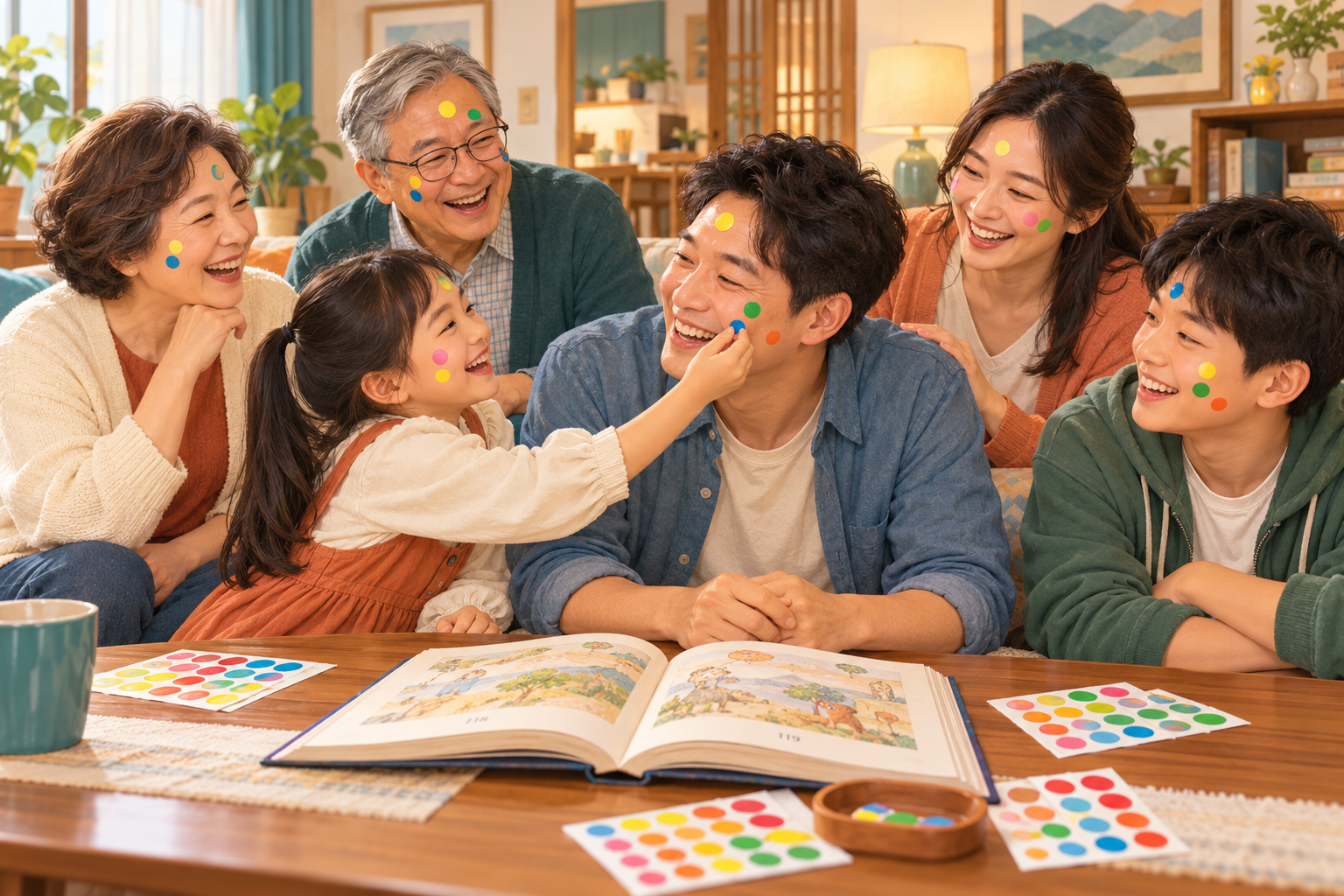
A thick book with numbered pages and skin-safe, easy-to-remove stickers. Give each person the same number, for example five. Agree to use the right-hand page number.
Ask before sticking: “May I put this on your cheek?” Avoid eyes, lips, nostrils and irritated skin. Stop if skin feels uncomfortable. Use clothes, the back of a hand or a paper face instead if preferred. Adults help preschoolers with numbers and stickers, keeping stickers out of mouths.
Ask everyone before taking a photo and remove stickers gently.
Back to activity ideasFamily Night Activity Ideas|10 minutes
Play rock-paper-scissors, stack one hand each, and enjoy a moment of shared laughter.

A stable table. Ask whether everyone is comfortable with hand contact, and agree that the final tap will be gentle.
Agree on the final pairing and ending before starting. No hard slaps, pressing down or holding anyone’s hand in place.
Adults can help preschoolers play slowly. Stack paper cards and tap the table instead if anyone prefers no contact or has hand discomfort.
In the family-night research experience described by Dr. Shu-Min Tsai, natural hand contact and shared laughter helped ease a tense atmosphere and created opportunities for family members to reconnect. This is a contextual observation; rebuilding trust also takes everyday respect, communication and consistent action.
Family Night Activity Ideas

Share a wish, gently toss a pair of clean, soft slippers, and encourage each other. Allow 15–20 minutes.
These are playful symbols of blessing, not predictions. Encourage everyone regardless of the result. Adults can help preschoolers; participants may write their wish or ask someone else to toss. Offer only support you can realistically provide.
Back to activity ideasFamily Night Activity Ideas|20 minutes
No materials needed. The host secretly welcomes anyone whose response includes “thank you”.
Allow 2 minutes for instructions, 8 for guessing, 8 for sharing gratitude and 2 for closing. Do not ridicule anyone; allow passing or writing later. Adults can help preschoolers.
Back to activity ideas
Make one-on-one time for children who tend to keep their needs to themselves.

Build confidence in small steps, from saying hello to speaking in front of others.

Use Family Night to help children set goals, choose chores and review their progress.