
1. Expressing Regret
Name the harm, express sorrow and listen.
I called you useless. That was hurtful, and I am sorry. If you want to, I would like to hear how you felt.
Repairing family relationships
Apologizing means acknowledging harm, taking responsibility and rebuilding trust through lasting change.
Based on The 5 Apology Languages by Gary Chapman and Jennifer Thomas. Use this as a communication framework, not a fixed label for a family member. Needs may differ across situations. The examples below are original family-education adaptations, not quotations from the book. Using all five does not entitle anyone to forgiveness.
Name the harm, express sorrow and listen.
I called you useless. That was hurtful, and I am sorry. If you want to, I would like to hear how you felt.
Own the action without excuses or blame.
Being tired did not justify shouting at you. That was my responsibility, not your fault.
Offer a repair that fits the harm. Gifts do not purchase forgiveness.
I misjudged you in front of the family. I will explain to them that I was wrong.
Make a specific plan for change and follow through.
When I become upset, I will pause and agree on a time to return to the conversation. I will stop using insulting words.
Invite forgiveness while respecting the other person’s time and choice.
I hope you can forgive me. If you are not ready, I will respect that and will not rush you.
Do not add “but you…” or demand immediate forgiveness. Parents can maintain appropriate limits while apologizing for shouting or humiliation. Apology, forgiveness and restored trust are different; trust takes time and consistent action.
Write: “I did ___. It may have made you feel ___. That was my responsibility. I am sorry. I will repair it by ___; next time ___ happens, I will ___.” Check whether the other person is ready to listen. Review your follow-through after a week. Do not pressure family members to share painful experiences publicly.
For recurring relationship difficulties, seek family education support. If distress affects sleep, work or caregiving, consult a qualified mental health professional or doctor.
Threats, violence, coercion or immediate safety concerns call for protection first, not more communication exercises. In Taiwan, call 113 for protection support; call 110 for an immediate danger requiring police. For emotional distress, 1925 offers 24-hour support. Outside Taiwan, use local emergency and support services.
This site provides family education guidance, not psychological treatment or emergency support.

Stay connected with adult children while respecting boundaries and adjusting expectations.
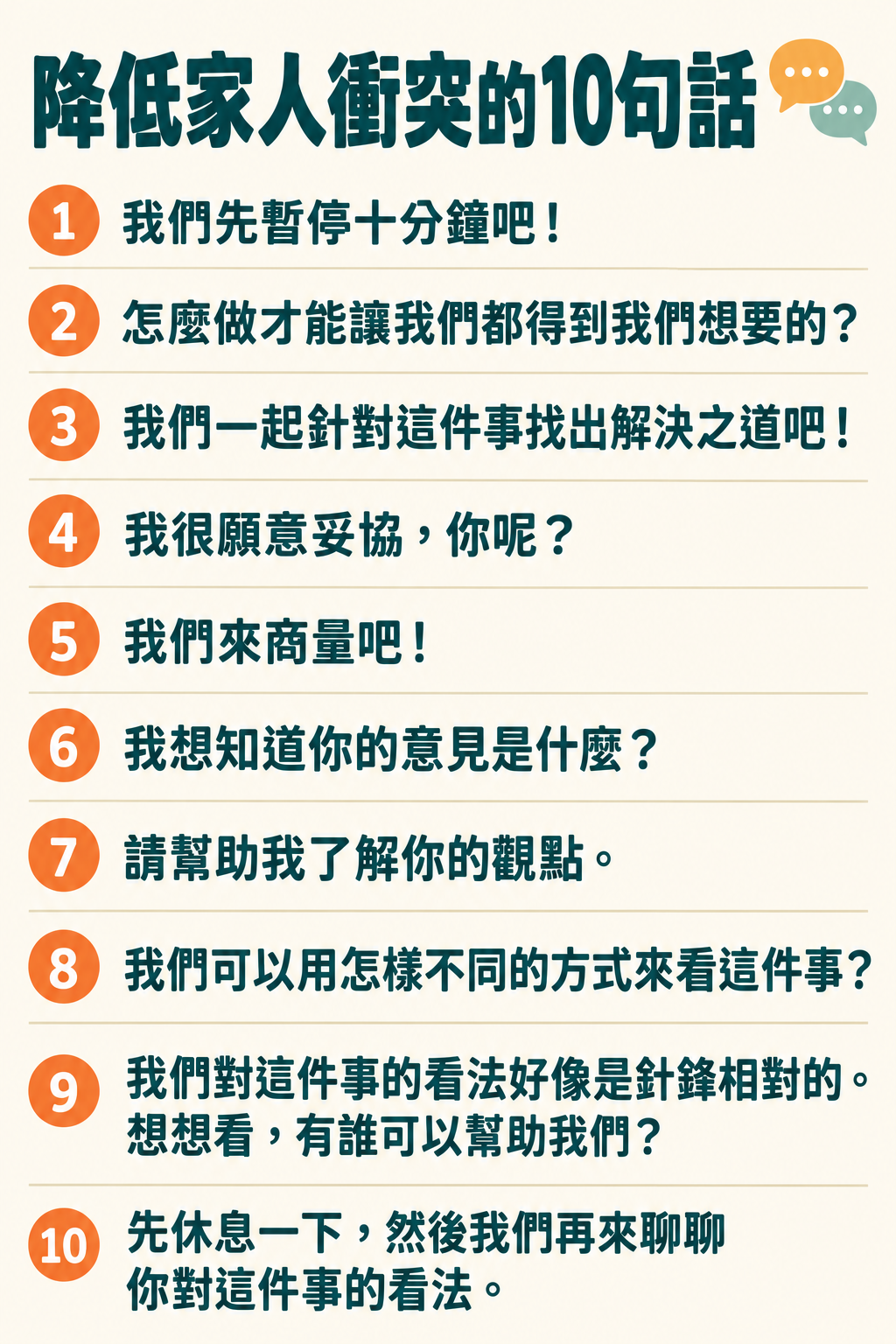
Discuss everyday responsibilities and work through problems together.
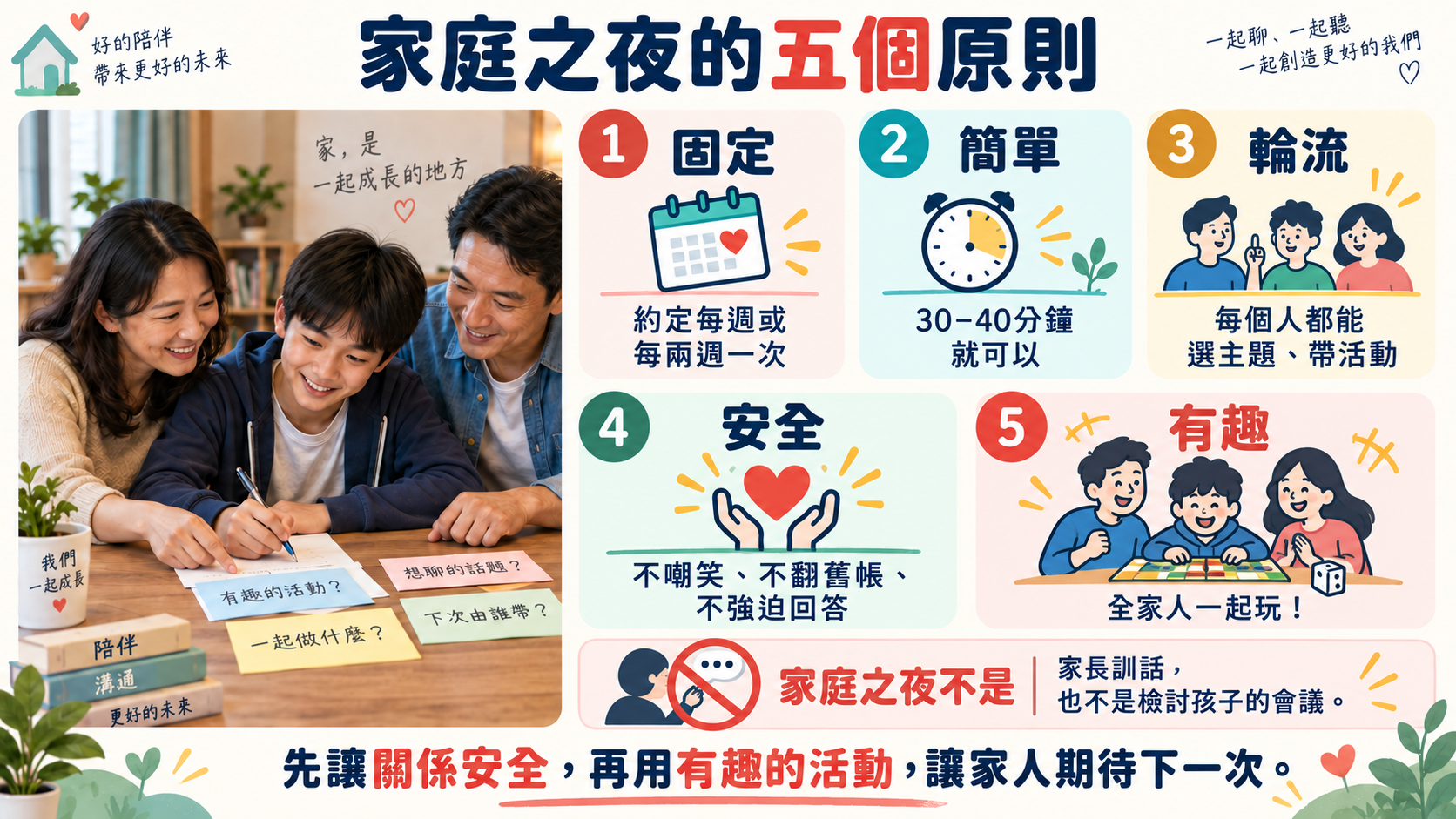
Set aside time to catch up and hear what each of you needs.