
Parents reflect
Where can my teenager practice making decisions? Can I describe my worries specifically?
Understand growing needs. Stay connected with care and boundaries.
Listen, discuss and practice together.
Adult children and parentsCare, boundaries and adult-to-adult relationships.
As children grow, relationships change. Begin with their needs for independence, privacy, peers and respect.
Where can my teenager practice making decisions? Can I describe my worries specifically?
What independence would I like? What responsibility can I take so my family understands my plans?
What can be negotiated? What needs clear safety boundaries and ways to seek help?
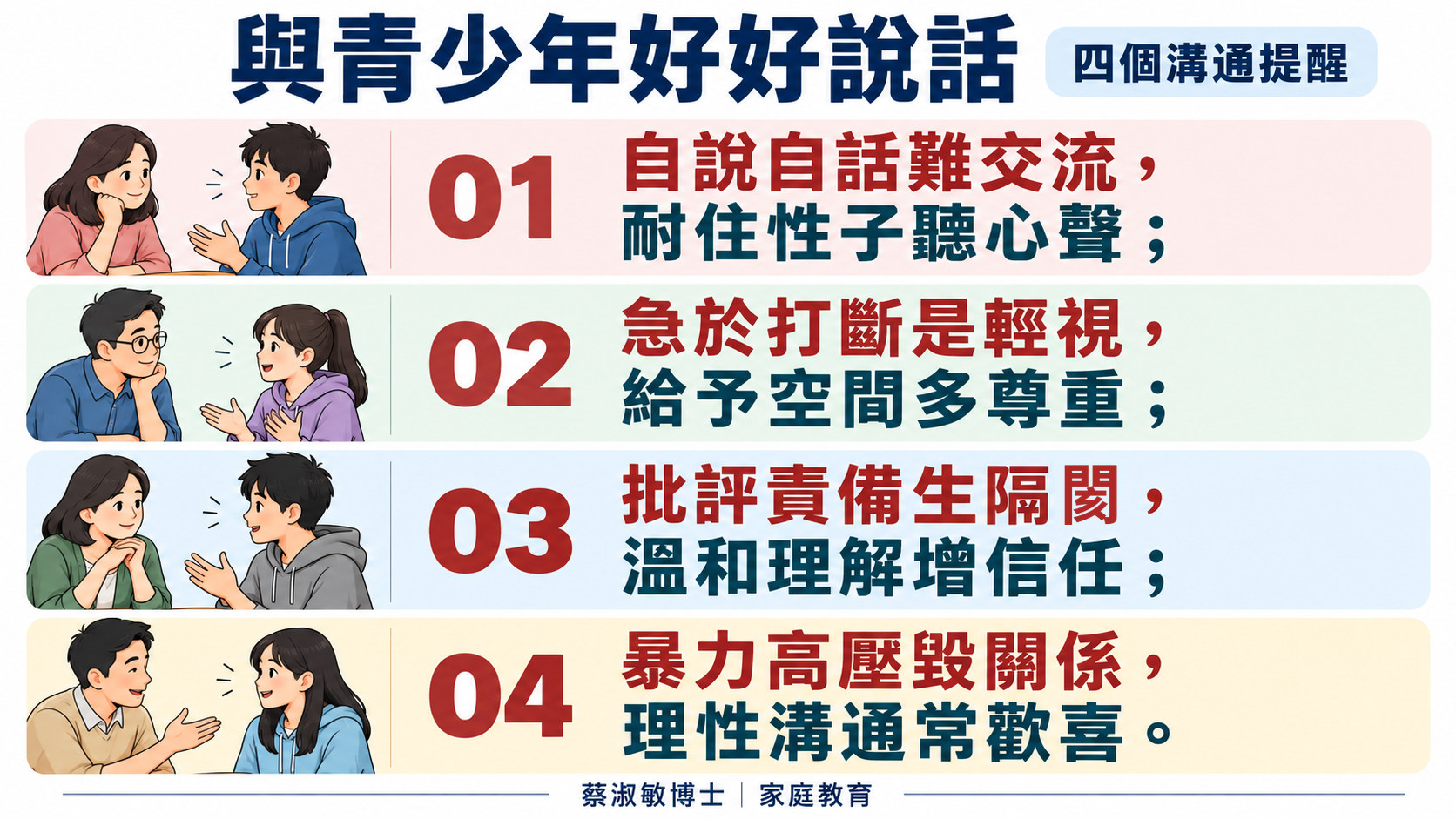
Talking only about your own concerns makes connection difficult. Listen to what your child wants to say.
Interrupting can feel dismissive. Give each other space and respect.
Blame can create distance. Gentle understanding helps build trust.
Violence and pressure damage relationships. Practice reasoned conversation.
Adapt these examples to your age, circumstances and natural way of speaking.
Would you like me to listen or help you think it through?
I would like to finish first, then hear your thoughts.
Being misunderstood made you angry. We also need to talk about throwing things.
I’m angry, but I can try to put it into words.
Is now a good time, or shall we talk after dinner?
I need a rest first. Let’s talk after dinner.
When the agreed time passes without news, I worry. Please let me know you are safe.
Please hear my reasons before we discuss what to do.
Let’s discuss phone time, exceptions and what happens if the agreement is missed.
I would like to propose a plan and discuss my responsibilities.
Let’s pause and continue at eight tonight.
I might say something harsh right now. I need time to calm down.
Let’s look at how phone use affects sleep and schoolwork, and agree on time limits.
I need ten minutes to finish this round; then I will put it away as agreed.
Agree together: Discuss use times, where phones stay overnight, exceptions and what to do if the agreement is missed.
Which part was difficult? What kind of help would you like?
I need help sorting out what I do not understand. Please do not compare me with others.
Agree together: Choose one achievable learning goal and a review time. Discuss effort, methods and support as well as marks.
What do you appreciate about this person? I would also like to discuss specific behavior that concerns me.
I am willing to share, but please understand before judging.
Agree together: Agree on safe meeting places and ways to ask for help. Secrecy, demands for intimate images or money, and threats are reasons to seek a trusted adult. Respond to requests for help without blame.
I will knock and avoid reading your messages without permission. If there is a concrete safety concern, we need to address it together.
I need some privacy. I will pay attention to safety and let you know when I need your help.
Agree together: Ask before entering rooms, checking phones or sharing private information. Immediate danger may require necessary protective action; explain its reasons and scope when safe.
When you are late without news, I worry. How can you tell me when plans change?
I would like more flexibility. I will explain my plans and how I will get home.
Agree together: Agree on destination, companions, return time and transport. Choose a family code word for urgent help. Help first and discuss later.
I can give you space. Let’s talk after dinner, and please avoid insults.
I am upset and need quiet. I will talk after dinner.
Agree together: Distinguish needing space from hurtful behavior. Set a time to return; avoid repeated questioning, mockery or punitive silence.
Ask whether your child needs listening or help solving a problem.
Pause contact and seek trusted help if someone demands secrecy or intimate images, or uses expensive gifts to apply pressure.
Choose a family code word. When it arrives, respond first and discuss what happened later.
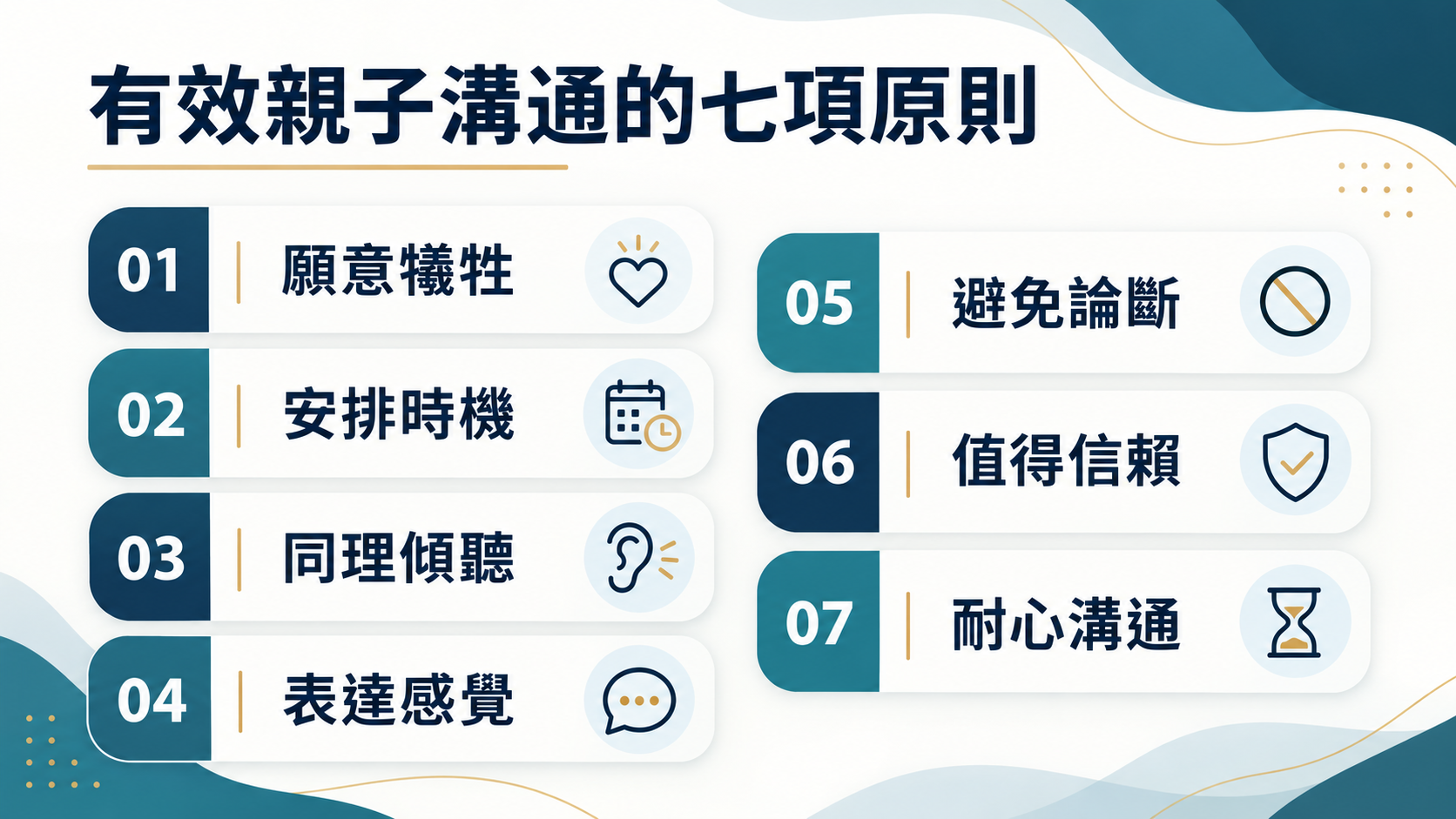
Seven principles: make time; choose a suitable moment; listen with empathy; express feelings; avoid judgment; be trustworthy; communicate patiently.
“We are both angry. Let’s rest for twenty minutes and see if we can continue.” If needed, agree on another time instead of using silence as punishment.
Parent: “I shouted and hurt you. I am sorry.” Teenager: “My reply was hurtful. I am sorry.” Avoid adding a counteraccusation.
Ask which words hurt most and what the other person wants understood. Check: “Do I understand you correctly?”
Choose a change you can observe, such as knocking, reporting changed plans or letting each other finish. Set a time to review.
Try: “Let’s pause”; “I want to understand”; “Can we start again?”; “What do you need?”; “Here is what I need”; “We see this differently”; “Let’s find a solution together”; “I am sorry for my tone”; “Thank you for telling me”; “Let’s talk after a rest.”

Ask what was enjoyable or difficult today. Listen, and allow your child to have nothing to share.
Walk, cook, play a game or ask your child to introduce music they enjoy.
Take turns choosing an activity, sharing updates and discussing one family arrangement. Keep it enjoyable.
A real Family Night story

A ninth-grade student initially wanted nothing to do with his parents’ Family Night. His father asked what he would like to eat. He chose Dongshan-style braised duck, so his father took him on a scooter to look for it.
They searched for a long time but could not find any. Sitting behind his father, the boy had already felt how much his father cared. He said, “Dad, it’s okay. Let’s just have pudding.”
Their relationship began to change. The son came to love Family Night and even suggested playing Big Two, a card game, together.
A real Family Night story

A busy single mother wanted to do something enjoyable with her teenage son, who did not live with her, to restore their growing distance. He loved music and wanted to learn guitar, so she gave him a guitar.
At their weekly visits, he played and they sang together. As their voices blended, their emotional connection gradually grew again.
By beginning with her son’s interests and making time for a shared activity, the mother created opportunities for them to grow closer.
Never let a problem to be solved become more important than your relationship with your child. — Dr. Shu-Min Tsai

For recurring relationship difficulties, seek family education support. If distress affects sleep, work or caregiving, consult a qualified mental health professional or doctor.
Threats, violence, coercion or immediate safety concerns call for protection first, not more communication exercises. In Taiwan, call 113 for protection support; call 110 for an immediate danger requiring police. For emotional distress, 1925 offers 24-hour support. Outside Taiwan, use local emergency and support services.
This site provides family education guidance, not psychological treatment or emergency support.