
Door closed and your teen won’t talk?
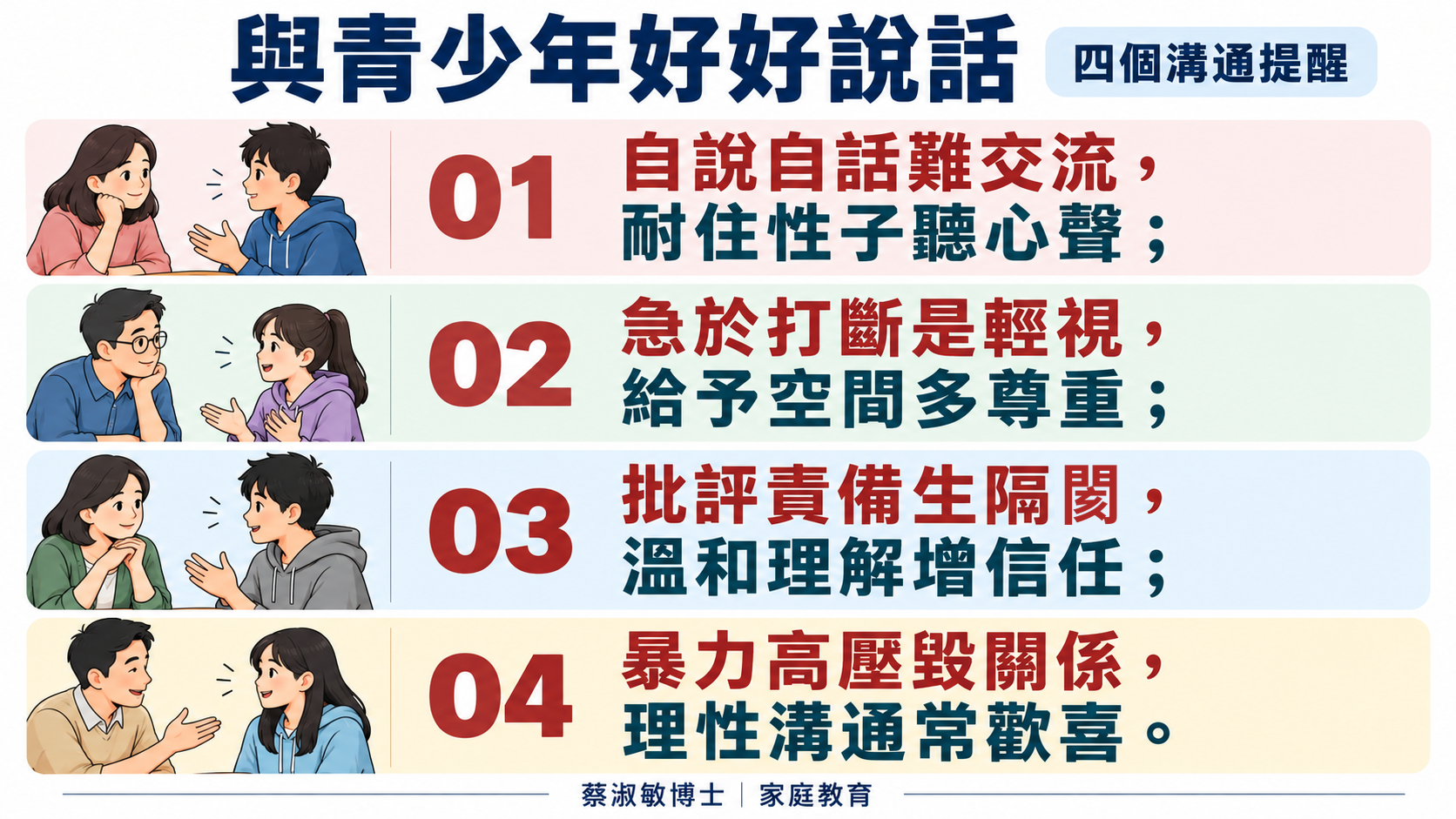
Respect their privacy and help them feel safe. Knock first, ask whether they want company or space, and offer to talk at a time that works for both of you.
Understanding teenagers, supporting growth
Choose the situation that feels most familiar. Find a way to start the conversation or something you can practice together.
Respect their privacy and help them feel safe. Knock first, ask whether they want company or space, and offer to talk at a time that works for both of you.
Notice when emotions or stress start to build. Help your teen settle first, then work together to find ways to cope that fit their needs.
Bring recurring disagreements to a family meeting. Ask how your teen uses their phone, then agree on screen time, bedtime routines and what to do when an agreement is broken.
Listen to what matters to your teen in relationships and future choices. Let them know you are there for them, then explore respect, boundaries and possible next steps together.
After an exam, your teenager shuts the door: “Stop asking about my grades!”
Illustrative dialogue for learning; not a research case quotation.
Separate feelings from actions: disappointment and anger are allowed, while safety still matters. Silence may mean they need time, so offer another chance to talk.
Parent: “This exam was disappointing. Before discussing grades, I want to hear what was hardest.”
Teen: “I worked hard and still did badly.”
Parent: “You want that effort to be seen. Let’s rest, then look at one difficult subject together.”
Each person rates today’s stress from 0 to 10 and names one helpful form of support. Passing is allowed. Reflect what you heard before offering advice.
Find more family activitiesYounger teens may need help naming feelings and organizing routines. Older teens can lead decisions about timing and support; adapt to the individual.
Seek school counseling or mental health care when changes persist or disrupt school, sleep, eating or relationships. Take talk of self-harm or suicide seriously and seek help immediately.
If there is immediate risk of self-harm or injury, stay with the young person when safe and call 119 or 110 in Taiwan. For emotional support call 1925; for protection concerns call 113. Outside Taiwan use local services.
This is family education guidance, not a diagnosis or substitute for professional care.
These sources inform general support and help-seeking guidance. The activities and dialogue examples are educational applications.
Talk together about freedom, responsibility and family agreements.
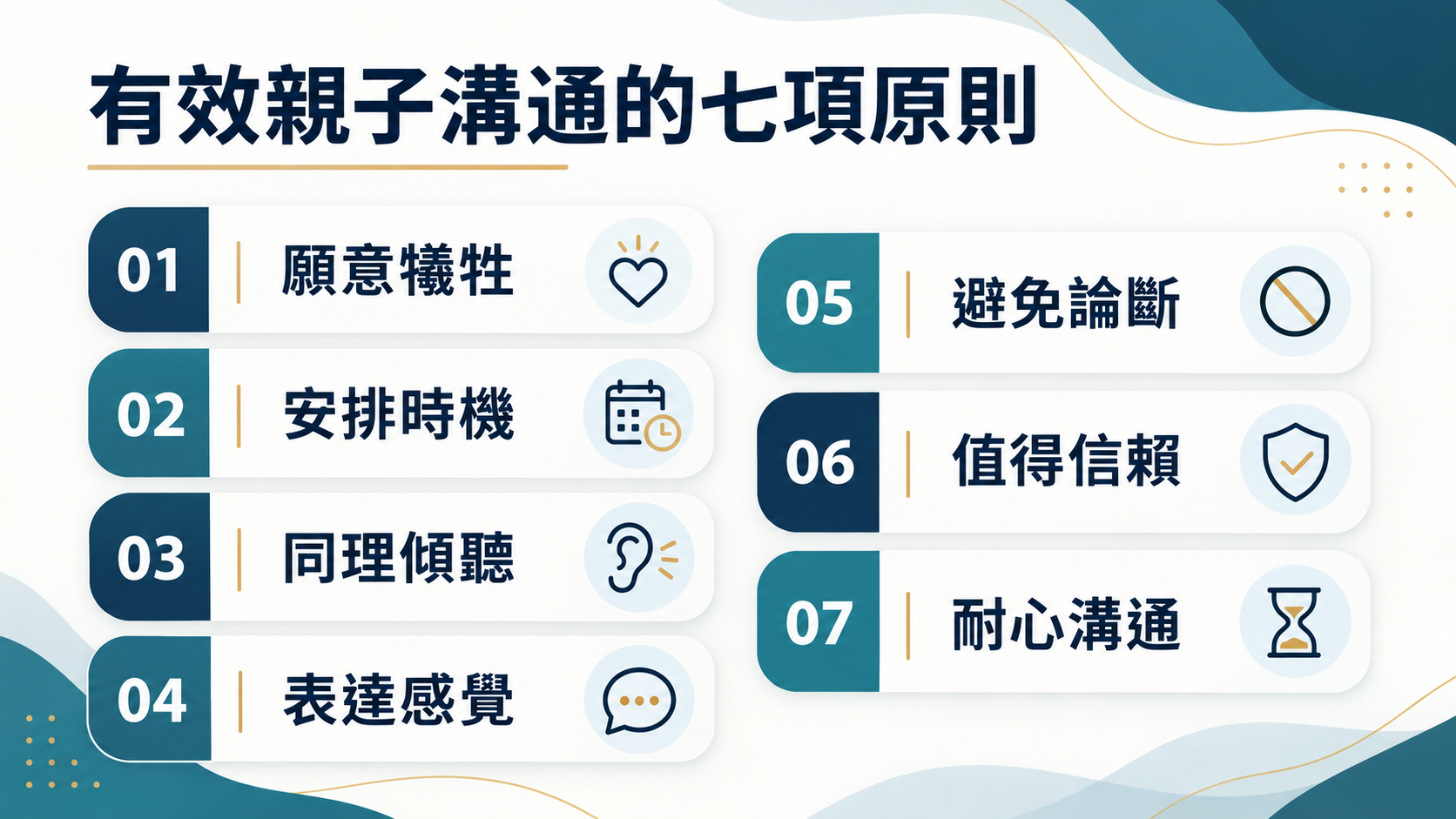
Practice listening and expressing feelings in everyday conversations.
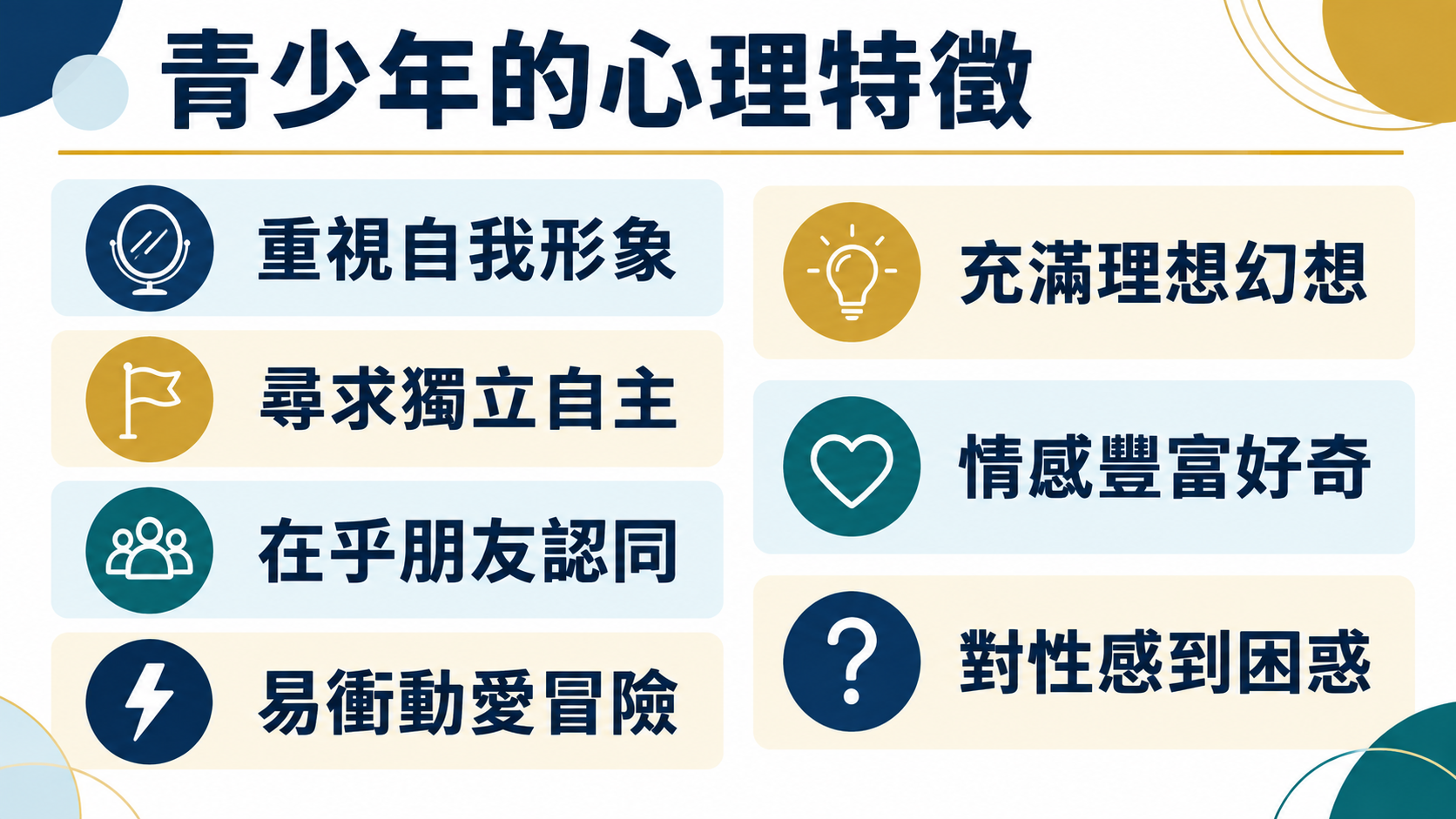
Talk about peer pressure, friendships and respect in relationships.