
Teen Emotions and Stress
Recognize signs of stress and begin by listening to how your teen feels.
Understanding teenagers, supporting growth
A teenager wants to stay out later. Parents worry about safety, and the conversation becomes a contest.
Illustrative dialogue for learning; not a research case quotation.
Independence takes practice, and safety needs understandable agreements. Explain specific concerns and negotiate responsibilities without treating privacy as disobedience.
Parent: “I worry when I cannot reach you late at night, not about knowing every conversation.”
Teen: “I need privacy. I will pay attention to safety and ask when I need help.”
Parent: “Let’s agree on a return time and emergency contact. I will not secretly read your messages.”
Draw three circles: personal choices, shared decisions and safety essentials. Sort everyday issues, then try one agreement for a week.
Find more family activitiesUse concrete steps for younger teens and gradually increase responsibility for older teens. Adjust to ability and context instead of relying on blanket surveillance.
Seek counseling or protection when conflict escalates repeatedly, someone fears going home, or threats, violence or coercive control occur.
If there is immediate risk of self-harm or injury, stay with the young person when safe and call 119 or 110 in Taiwan. For emotional support call 1925; for protection concerns call 113. Outside Taiwan use local services.
This is family education guidance, not a diagnosis or substitute for professional care.
These sources inform general support and help-seeking guidance. The activities and dialogue examples are educational applications.
Recognize signs of stress and begin by listening to how your teen feels.
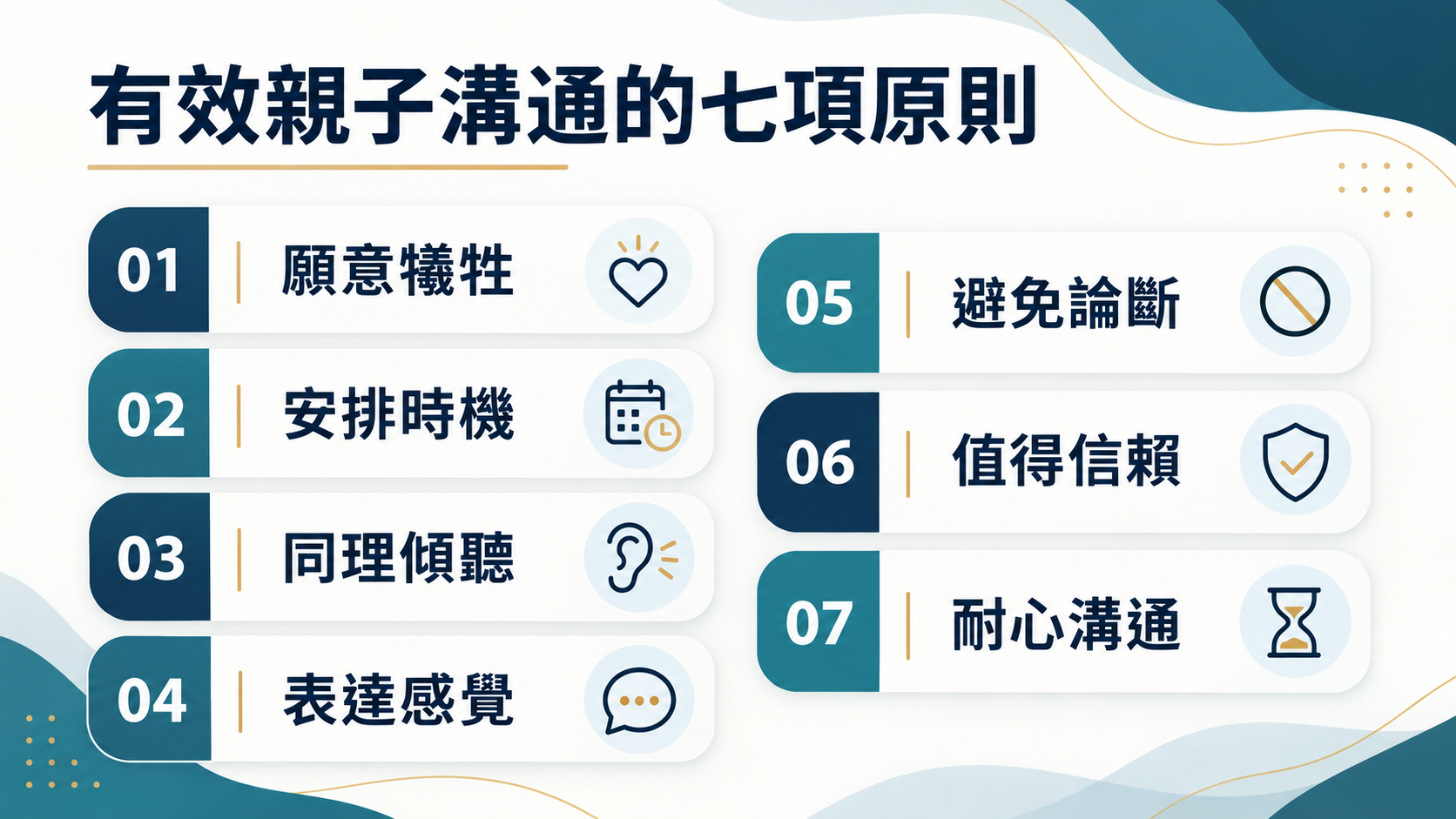
Practice listening and expressing feelings in everyday conversations.
Talk about peer pressure, friendships and respect in relationships.